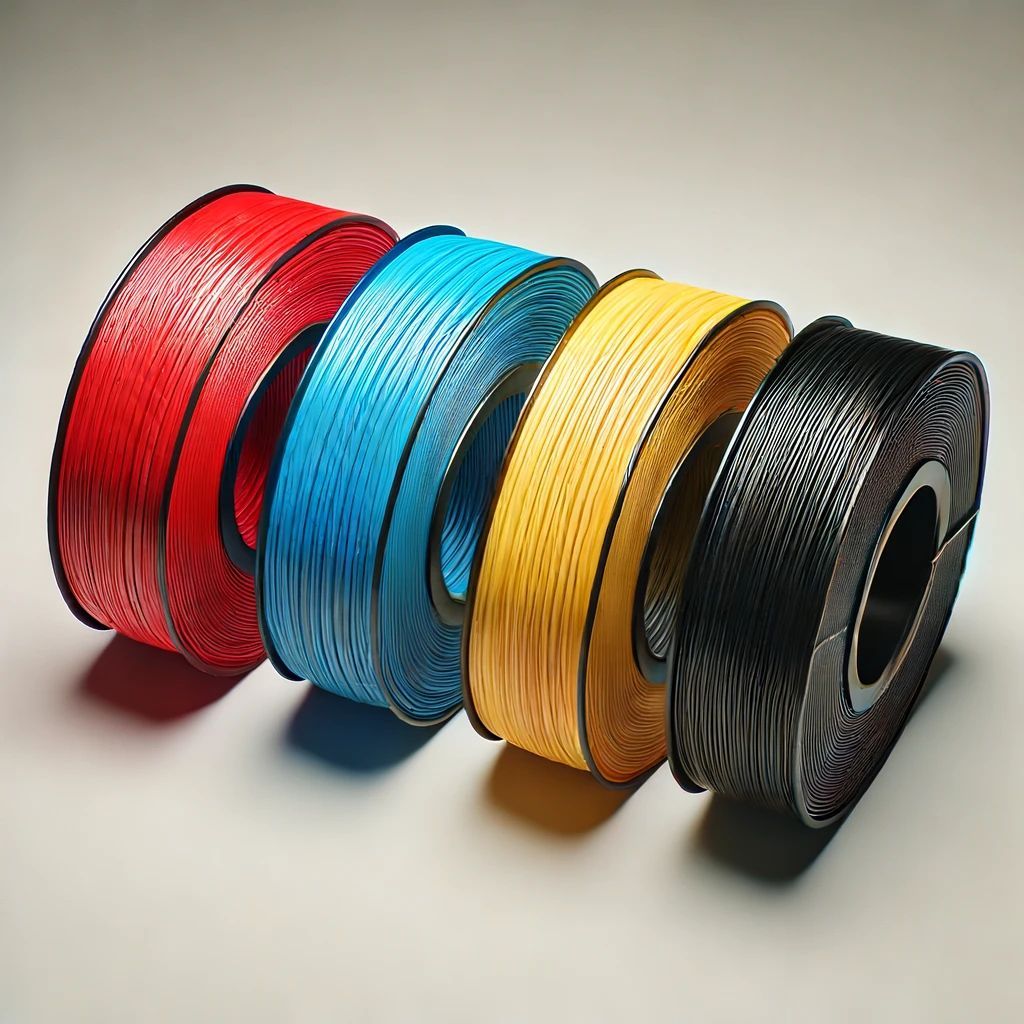
Nylon Filament
Nylon 3D Printing Material – Engineering‑Grade Performance for Functional Parts
Overview
Nylon is one of the most widely used engineering materials in additive manufacturing, and for good reason. It offers an excellent balance between strength, durability, flexibility, and wear resistance, making it ideal for functional prototypes and real‑world end‑use components. At Mitchell & Son, Nylon is often the go‑to material when customers need parts that are not just visual models, but components that actually work under load, movement, and repeated use.
This is the kind of material we use when a customer comes to us with a broken or obsolete part that can no longer be sourced. Instead of spending thousands on tooling or injection moulding, we reverse‑engineer the part, redesign it properly in CAD, and manufacture it in Nylon to deliver a strong, cost‑effective solution .
Key Technical Specifications (Typical Values)
• Tensile strength: 45–75 MPa
• Elongation at break: 10–50%
• Flexural strength: 65–90 MPa
• Impact resistance: High
• Heat deflection temperature: 95–170°C (material dependent)
• Density: ~1.01–1.15 g/cm³
• Wear resistance: Excellent
• Chemical resistance: Good against oils, fuels, and greases
These properties make Nylon particularly suitable for parts that experience mechanical stress, friction, and regular movement.
Why Engineers Choose Nylon
From an engineering standpoint, Nylon sits in a sweet spot between rigidity and toughness. It is strong without being brittle and flexible without being weak.
Engineers typically choose Nylon because:
• It performs well under load and repeated motion
• It resists cracking and fatigue better than PLA or ABS
• It offers low friction for moving components
• It can replace some traditionally machined plastic parts
For many applications, Nylon provides near injection‑moulded performance without the upfront tooling costs.
Real‑World Manufacturing Applications
Nylon is regularly used across multiple sectors, including automotive, industrial machinery, rail, and product development.
Common applications include:
• Gears, bushings, and bearing surfaces
• Clips, brackets, and mounting components
• Housings and protective covers
• Jigs, fixtures, and assembly aids
• Replacement parts for discontinued components
We often see Nylon used where parts must survive daily use, not just look good on a desk.
Design & Manufacturing Considerations
Nylon is a hygroscopic material, meaning it absorbs moisture. That’s why material handling, print setup, and infill selection matter. We always ask customers how the part will be used — whether it’s ornamental, lightly loaded, or under constant stress — because this determines infill percentage, wall thickness, and print orientation.
For strength‑critical parts:
• Higher infill (up to 100%) increases durability
• Wall thickness has more impact than infill alone
• Proper design reduces warping and improves accuracy
This is where experience makes the difference between a part that looks right and one that actually performs.
Commercial Benefits for Buyers
From a purchasing perspective, Nylon offers:
• Lower cost than machined plastic parts
• No tooling or mould costs
• Faster lead times
• Easy iteration if design changes are needed
For low‑to‑medium volumes, Nylon 3D printing can save thousands of pounds compared to traditional manufacturing routes.
Why Mitchell & Son Uses Nylon
We don’t just print parts — we solve problems. Nylon allows us to take legacy components, broken parts, or one‑off requirements and turn them into durable, functional solutions without over‑engineering or unnecessary cost .
If you need a part that has to work, not just exist, Nylon is often the right answer.

Latest Articles