Upload your file
Submit your STL, STEP, IGES, DXF or reference image through the quote page. No minimum order is required.


Quality Business Awards 2024 winner
Specialising in Industrial Additive Manufacturing UK for functional, production-grade 3D printed parts. Instant geometry analysis, automated quoting, and CAD pipeline integration for engineers and manufacturers.
From single prototypes to low-volume production runs — we deliver functional, production-grade parts with no minimum order quantities and no tooling costs.
Fused Deposition Modelling
Ideal for functional prototypes, jigs, fixtures, and end-use parts. Wide material range including ABS, ASA, Nylon, and carbon-fibre composites.
Stereolithography
Ultra-high resolution resin printing for intricate geometries, smooth surface finishes, and parts requiring tight tolerances.
Multi Jet Fusion & Selective Laser Sintering
Production-grade powder-bed technology for complex geometries, high mechanical strength, and batch manufacturing without tooling.
From Physical to Digital
We scan, measure, and recreate obsolete or discontinued components — converting physical parts into production-ready CAD files.
Concept to Component
Rapid iteration from sketch, photo, or CAD file. Test form, fit, and function before committing to production tooling.
Design for Additive
Our engineering team reviews your CAD before printing — optimising geometry, wall thickness, and orientation for best results.
A streamlined workflow designed to get your parts manufactured quickly, without complexity or hidden costs.
Submit your STL, STEP, IGES, DXF or reference image through the quote page. No minimum order is required.
We check geometry, material suitability, orientation, tolerances and production risk before recommending the right route.
Your parts are produced, finished where required, inspected, and prepared for delivery or collection.

3D printing for manufacturing is most valuable when the part is awkward, urgent, low-volume, or no longer available through a conventional supplier. It removes tooling delay and helps engineers move from CAD, sketch, or failed component to a usable physical part quickly.
Mitchell & Son is deliberately strongest in specialist work rather than commodity mass production: heritage automotive restoration, defence-grade polymer components, marine repairs, jigs, fixtures, brackets, housings, and practical replacements where engineering judgement matters.
For very high volumes, injection moulding or large automated print bureaus may be the right route. Our advantage is personal, engineering-led problem solving around materials, tolerances, fit, and end-use conditions that automated quoting systems often miss.
As an industrial additive manufacturing UK partner, we focus on engineering 3D printing and low volume manufacturing for real functional parts, not hobby kits or generic marketplace fulfilment.
Every order is assessed around use: load, heat, moisture, wear, surface finish, tolerance and quantity. That keeps the recommendation specific to the job instead of relying on generic 3D printing claims.
Automotive, defence, marine, architecture, product design, and maintenance teams use us when they need a part that solves a defined problem, not just a print from a file.
This focused model keeps us away from low-margin commodity fulfilment and towards projects where careful material selection, CAD review, and clear advice make the difference between a useful component and a failed print.
Use our instant quote platform to upload an STL file or CAD model and get an online 3D printing quote for low volume manufacturing. This is the fastest way to compare costs for production additive manufacturing, engineering prototypes, and custom plastic components.
Whether you need an instant additive manufacturing quote, upload STEP file quote, or instant pricing for functional 3D printed parts, we make it simple to move from CAD to manufacture.

In the automotive sector, speed and precision are fundamental to staying competitive. 3D printing enables engineering teams to move from concept to physical part in a fraction of the time required by traditional manufacturing methods, removing bottlenecks associated with tooling, machining, and supplier delays.
This is particularly valuable during the prototyping phase, where rapid iteration can significantly accelerate product development cycles. From early-stage design validation through to functional testing, additive manufacturing allows complex geometries to be produced quickly and accurately.
For engineering-led automotive additive manufacturing, we focus on 3D printed automotive parts, reverse engineer obsolete automotive parts and manufacture custom automotive components for low volume production.
Engineers can test multiple design variations in parallel, refine aerodynamics, optimise weight, and improve part performance without the cost penalties typically associated with retooling. This level of flexibility is critical in performance-driven environments such as motorsport, electric vehicle development, and advanced engineering programmes.
Beyond prototyping, 3D printing plays a key role in the production of jigs, fixtures, and tooling used on the shop floor. These components can be tailored precisely to the task, improving assembly accuracy, reducing operator fatigue, and increasing overall production efficiency.
Low-volume production is another area where additive manufacturing delivers clear advantages. For specialist vehicles, heritage restorations, or custom components, traditional manufacturing methods often become cost-prohibitive.
Ultimately, in an industry where time-to-market, innovation, and performance define success, 3D printing provides a powerful, scalable solution that aligns directly with the demands of modern automotive engineering.

In the defence sector, manufacturing is about delivering performance, reliability, and operational advantage under demanding conditions. 3D printing plays a critical role here by enabling the production of lightweight structures, complex geometries, and low-volume, high-performance components that would be difficult or impossible to achieve using traditional methods.
Weight reduction is a constant priority in defence applications, whether in aerospace, land systems, or naval engineering. Additive manufacturing allows engineers to optimise designs through lattice structures, internal channels, and topology optimisation, reducing mass without compromising strength.
Precision is equally vital. Defence components often require tight tolerances and consistent repeatability, particularly for mission-critical systems. 3D printing enables highly accurate parts with reduced assembly requirements, as complex assemblies can often be consolidated into a single component.
Another key advantage is the ability to manufacture low-volume or bespoke parts on demand. Defence projects frequently involve specialised equipment, legacy systems, or rapid deployment scenarios where traditional tooling and long lead times are not viable.
Furthermore, 3D printing supports supply chain resilience. Parts can be produced closer to the point of use, reducing dependency on complex global supply chains and helping ensure critical components are available when needed.
That makes instant quote and on demand manufacturing workflows especially valuable in defence, where low tooling cost manufacturing solutions and agile production can mean the difference between success and delay.
In a sector where performance, speed, and adaptability are non-negotiable, 3D printing is a strategic capability.

3D printing has become an essential tool within modern architectural workflows, bridging the gap between concept and construction with a level of clarity that traditional methods struggle to achieve.
Detailed physical models allow architects, developers, and clients to fully understand spatial relationships, scale, and design intent in a way that drawings and digital renders alone cannot deliver.
From early-stage concept validation through to final presentation pieces, additive manufacturing enables rapid iteration. Design changes can be implemented quickly and produced within hours, allowing architects to refine layouts, test structural ideas, and explore multiple design directions without slowing down the project timeline.
Beyond visualisation, 3D printing also supports technical evaluation. Sectional models, exploded assemblies, and detailed component prints help identify potential design challenges before construction begins, reducing risk and avoiding costly revisions later in the process.
Presentation quality is another key advantage. High-resolution prints can be finished to a professional standard, making them ideal for stakeholder meetings, planning submissions, and investor presentations.
In a sector where precision, communication, and speed are critical, 3D printing gives architects a practical edge, turning ideas into physical assets that inform better decisions and improve collaboration.

In the marine sector, reliability is critical. Saltwater environments, constant exposure to moisture, and mechanical stress place extreme demands on every component. 3D printing provides a practical solution for producing corrosion-resistant parts, bespoke fittings, and rapid replacements without the delays associated with traditional manufacturing.
Whether operating commercial vessels, maintaining leisure craft, or supporting offshore operations, the ability to produce parts on demand significantly reduces downtime.
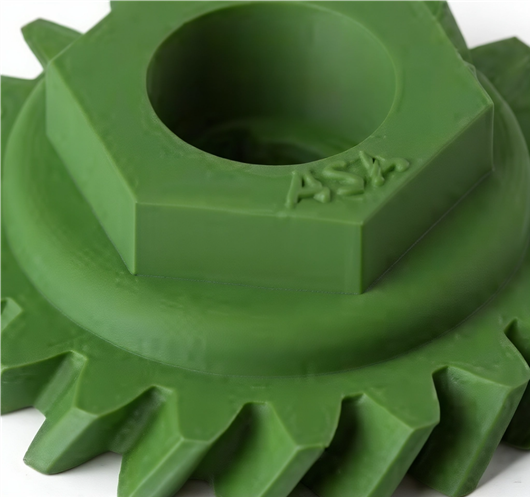
Materials such as ASA, PETG, and engineering-grade polymers offer excellent resistance to UV exposure, saltwater corrosion, and temperature variation, making them well suited to harsh marine conditions.
Customisation is another key advantage. Marine systems are rarely standardised, particularly in retrofit or repair scenarios. 3D printing allows for precise, application-specific parts to be produced quickly.
Ultimately, 3D printing in the marine industry is about control over lead times, costs, and performance.

3D printing brings practical value into the domestic space by solving problems that traditional retail often cannot address. In many homes, the challenge is not buying a product, it is finding the right product.
Off-the-shelf solutions are designed for the average use case, but homes are rarely average. Fixtures break, components wear out, and older systems often rely on parts that are no longer manufactured.
Rather than replacing an entire unit, 3D printing allows for the precise reproduction or redesign of a single component. This reduces waste, lowers costs, and extends the lifespan of existing household items.
Beyond repair, the domestic market also benefits from true customisation. Homeowners can create bespoke fittings tailored to their environment.
Ultimately, 3D printing shifts the domestic approach from compromise to control, enabling homeowners to solve problems directly and move away from the limitations of mass-produced products.

Custom brackets, housings, and replacement components for lift systems demand precision and adaptability, especially when dealing with confined spaces, legacy infrastructure, or discontinued parts.
3D printing addresses this directly by enabling the rapid production of highly accurate, application-specific components without the need for tooling or long lead times.
In elevator systems, where space constraints and safety-critical performance matter, additive manufacturing allows engineers to design parts that fit precisely within existing assemblies.
One of the most valuable advantages is the ability to support legacy equipment. Many buildings still operate lifts that are decades old, where original manufacturers no longer supply parts.
For maintenance teams and engineers, this means faster turnaround times, reduced downtime, and greater control over part availability.

In the heritage vehicle sector, maintaining authenticity while ensuring functionality is a constant challenge. Many classic, vintage, and historic vehicles rely on components that are no longer manufactured.
This is where 3D printing becomes a powerful enabler. Using advanced reverse engineering techniques, existing parts can be scanned, analysed, and digitally reconstructed with a high degree of accuracy.
Even when original components are damaged, incomplete, or entirely missing, digital modelling allows for precise recreation based on reference geometry, historical data, or comparable assemblies.
3D printing allows these components to be produced on demand, eliminating the need for expensive tooling or large production runs. This is particularly valuable for rare vehicles where sourcing spares can take months or years.
Ultimately, 3D printing supports the preservation of heritage vehicles by bridging the gap between historical craftsmanship and modern manufacturing capability.
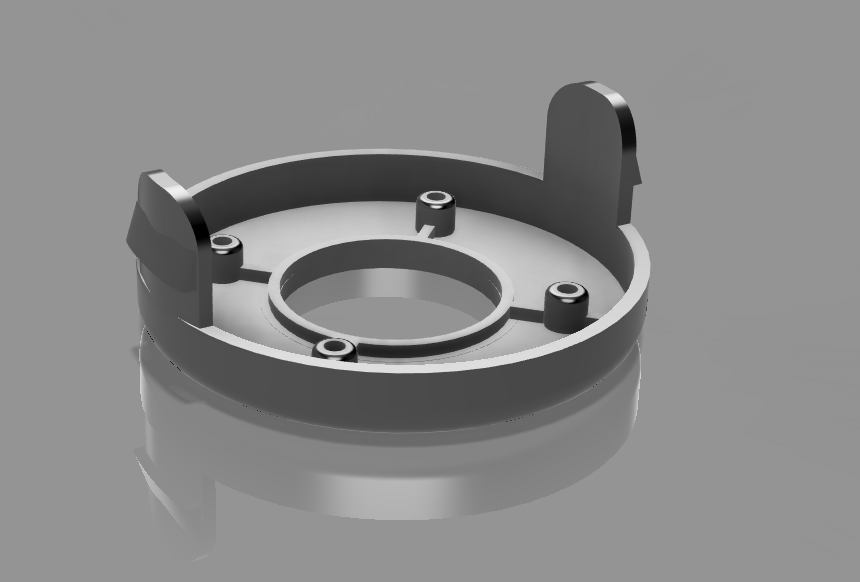

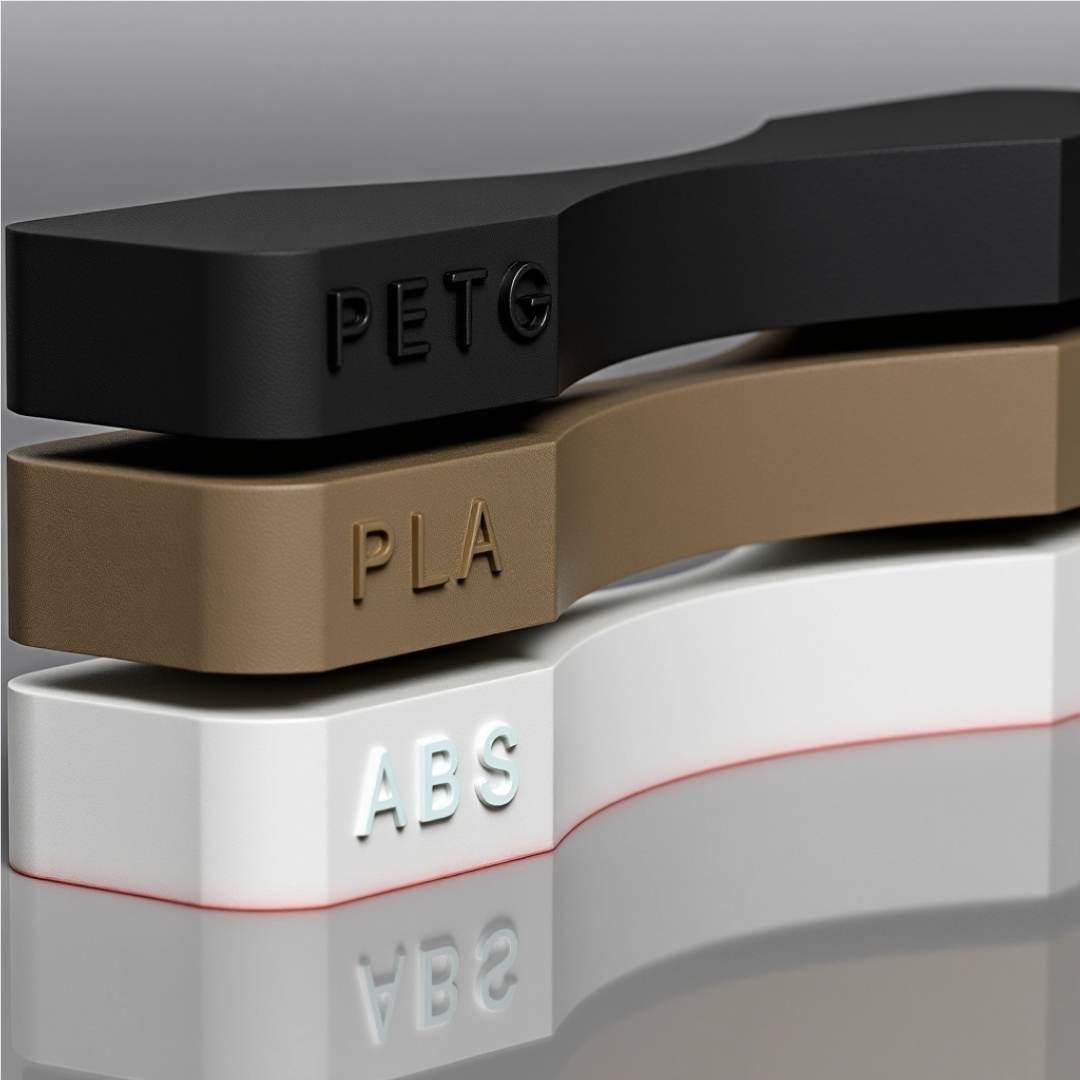
Material choice is where many 3D printed parts succeed or fail. We select polymers around service conditions such as load, heat, UV exposure, moisture, wear, chemical contact, flexibility, and surface finish.
The goal is practical reliability. Emergency replacements need to restore function quickly; production parts need repeatability and lifespan; visual models need clean detail without paying for unnecessary engineering-grade material.
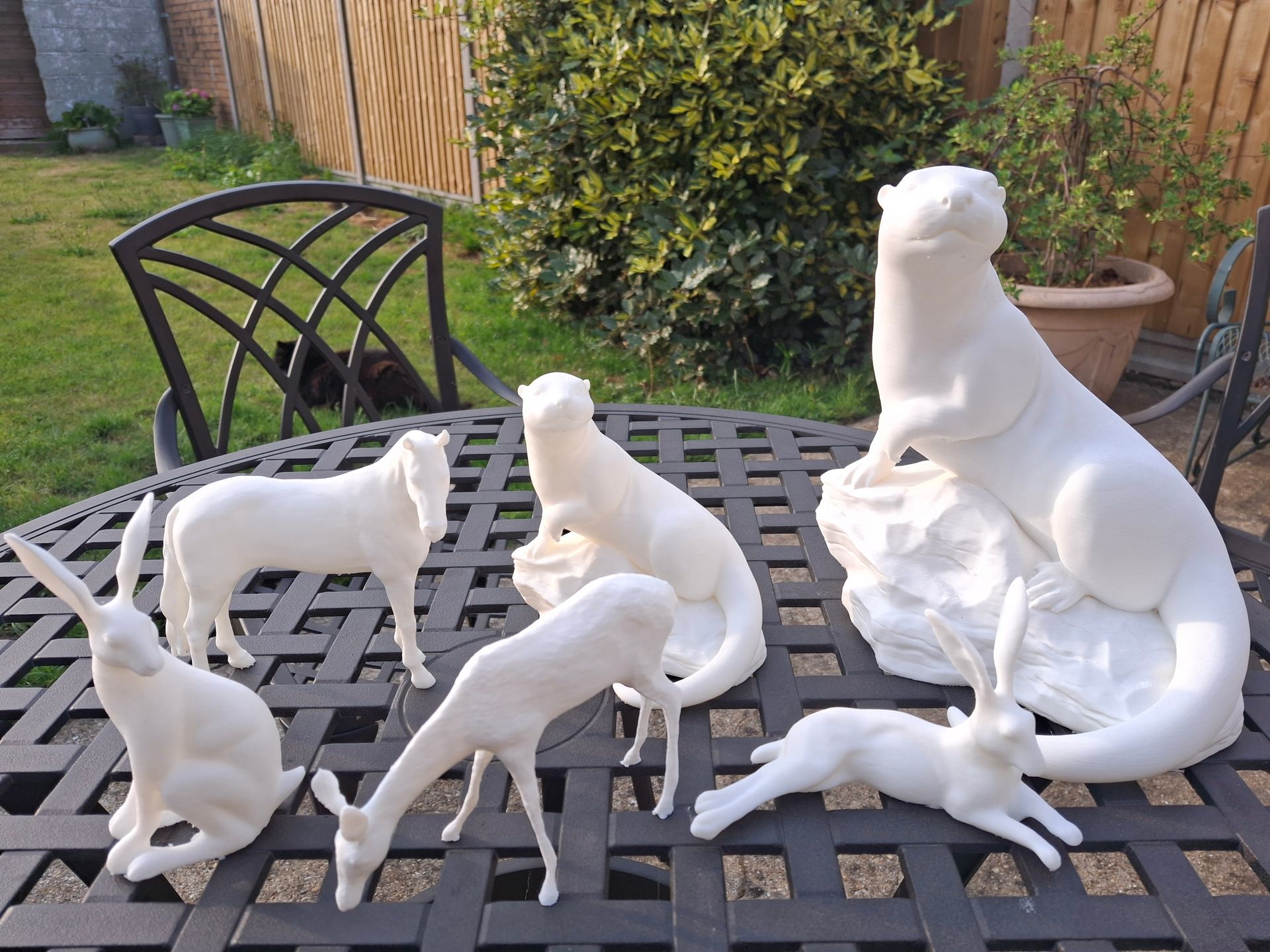

The cost of 3D printing is not a fixed price. It is a calculation.
It depends on several key factors:
Unlike traditional manufacturing, there are no tooling costs, but that does not mean every part is cheap.
For small batches, prototypes, and complex geometries, 3D printing is often more cost-effective than machining or injection moulding. For high-volume production, traditional methods may still be more economical.
What matters is understanding where it fits. If you are producing one-off parts, custom components, or low-volume runs, 3D printing reduces upfront investment and speeds up delivery.
It is not about price alone. It is about total cost of production, time, and flexibility.
For procurement teams, predictability matters. Once a part has been proven in service, repeat orders can be produced consistently, with known material, finish, and tolerance expectations.
This is particularly useful where legacy equipment is still operational but no longer supported by the original manufacturer. It allows businesses across Hampshire and the South Coast to extend asset life without redesigning an entire system.
Based in Southampton, Mitchell & Son supports businesses throughout the Solent region that need fast, sensible manufacturing solutions. Injection moulding has its place, but the upfront costs often run into thousands before a single part is produced.
For low-volume, emergency, or discontinued components, additive manufacturing is often the only commercially sensible option. We also offer post-processing where required, including sanding, surface finishing, and reinforcement, to improve durability or appearance when needed.
These services are optional and applied only where they add real value. The objective is always the same: produce a part that works properly, fits correctly, and does its job without becoming the next problem.
Everything we do is driven by real-world use. If a part is ornamental, it can be produced cheaply and quickly. If a part is handled daily, subjected to force, or critical to safety, it is built accordingly.
We do not oversell materials or processes that are unnecessary, and we do not underspec parts that will fail prematurely. This approach has allowed us to support manufacturers, engineers, restorers, and maintenance teams across Southampton and Hampshire with solutions that make practical and financial sense.
When something breaks, the priority is getting it working again reliably, not experimenting with technology for its own sake.
If you are dealing with a breakdown, an obsolete component, or a supply issue that cannot wait, 3D printing provides a fast and flexible solution. By combining practical experience, CAD capability, and material knowledge, we are able to produce functional parts without the cost and delay of traditional manufacturing methods.
The goal is not just to print a part, but to solve the problem that caused the failure in the first place.
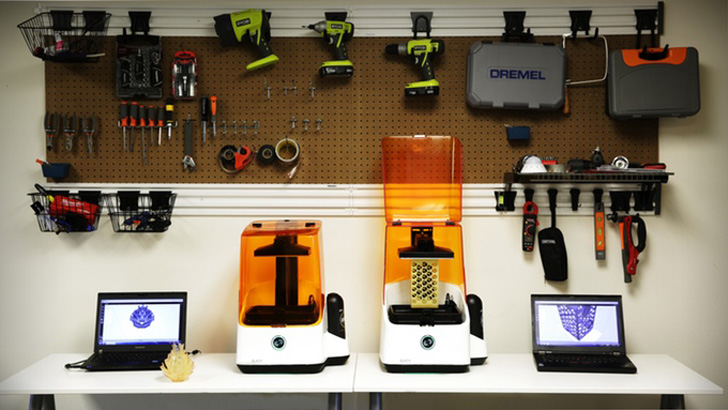
Mitchell & Son Additive Manufacturing focuses on specialist engineering problems: obsolete components, heritage vehicle restoration, defence and marine polymer parts, low-volume production, rapid prototyping, and custom functional parts that need to work in the real world.
Every job is considered through material choice, geometry, tolerance, finish, and end-use conditions. Where partner capacity or specialist processes are useful, we keep ownership of the brief, quality expectations, and customer communication.
Real feedback from satisfied clients
Very helpful guys, patient too... Highly recommend!
I needed small brackets for SieMatic kitchen units... Excellent standard.
Four dust caps for a 1950s Riley... Perfect, spot on.
Beautifully made part, easy to deal with.
Near absolute duplicate of original fastener... couldn't ask for more.
Quick and efficient, great quality.
Amazing level of service — fast response.
Excellent PPE mask production during need — sturdy and fast delivery.
We work across automotive, aerospace, marine, medical, defence, heritage restoration and industrial manufacturing. The focus is on functional, low-volume, production-grade parts.
Yes. We specialise in low-volume manufacturing and can provide quotations for small batches, prototypes and replacement components without tooling.
We offer engineering plastics like ABS, ASA, PETG, nylon variants, carbon-fibre composites, TPU and resin systems depending on the application.
Yes. Use our quote page to upload your model and receive a fast estimate for 3D printing, with engineering review where needed.
We can. We recommend materials such as ASA or PETG for outdoor exposure and will advise based on the part’s environment.
Yes. We support prototype development, functional testing, and direct low-volume production of finished parts.
Yes. We perform a technical review to check manufacturability, suggest improvements, and ensure the part prints reliably.
Turnaround depends on material, quantity and post-processing. Many jobs are completed within a few days when the design is ready and materials are available.
Yes. We recreate legacy components from drawings, samples or photos, then manufacture replacement parts that fit and function reliably.
Absolutely. This is an industrial additive manufacturing service for real engineering use, not a hobbyist 3D print shop.